
To rank well for Process Fluid Chillers, your content needs to balance technical authority with clear solutions for industrial pain points. Here is a structured, SEO-optimized content outline designed to capture high-intent search traffic.
Maximizing Industrial Efficiency: The Ultimate Guide to Process Fluid Chillers
In high-precision manufacturing, heat is the enemy of consistency. Process fluid chillers are the unsung heroes of the industrial world, providing the precise temperature control necessary to protect expensive machinery and ensure product quality.
Whether you are cooling a laser cutter, a chemical reactor, or a food processing line, understanding how these systems work is key to operational success.
What is a Process Fluid Chiller?
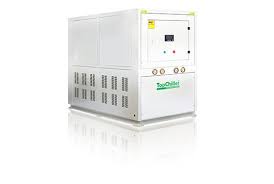
Unlike standard HVAC systems designed for human comfort, a process fluid chiller is engineered to remove heat from a specific process or piece of equipment. These systems circulate a cooling medium—typically water or a water-glycol mixture—to maintain a constant temperature under varying load conditions.
Key Components
- Compressor: The “heart” that moves refrigerant through the system.
- Evaporator: Where the heat exchange happens between the process fluid and the refrigerant.
- Condenser: Dissipates the collected heat (either via air or water).
- Expansion Valve: Regulates refrigerant flow for optimal cooling.
Air-Cooled vs. Water-Cooled Chillers
Choosing the right cooling method depends on your facility’s environment and utility costs.
| Feature | Air-Cooled Chillers | Water-Cooled Chillers |
| Installation | Easier; no cooling tower needed. | Complex; requires a cooling tower. |
| Efficiency | Lower (affected by ambient air). | Higher (constant heat rejection). |
| Space | Requires outdoor or well-ventilated space. | Compact; usually installed indoors. |
| Maintenance | Simple (clean coils). | High (water treatment required). |
Critical Applications Across Industries
Process fluid chillers are versatile tools used across a wide spectrum of sectors:
- Plastics & Rubber: Cooling molds to reduce cycle times and improve part finish.
- Medical & Pharmaceutical: Maintaining exact temperatures for MRI machines and lab reagents.
- Metal Finishing: Removing heat generated during plating or anodizing.
- Food & Beverage: Rapidly cooling ingredients or finished products to ensure safety and shelf life.
How to Choose the Right Chiller for Your Facility
Selecting a chiller isn’t just about “getting it cold.” You need to calculate the cooling load to ensure the system isn’t undersized (leading to failure) or oversized (wasting energy).
3 Steps to Calculate Your Needs:
- Determine the Temperature Delta: Calculate the difference between the inlet fluid temperature and the desired outlet temperature.
- Calculate Flow Rate: Know how many gallons per minute (GPM) your process requires.
- Check Ambient Conditions: Consider the maximum temperature of the room or outdoor area where the unit will sit.
Pro Tip: Always include a “safety factor” of 10–20% in your capacity calculations to account for unexpected heat spikes or future equipment expansions.
Why Efficiency Matters: The ROI of Modern Chillers
Investing in a high-efficiency process fluid chiller offers more than just lower electricity bills. Modern units feature Variable Frequency Drives (VFDs) and smart controllers that:
- Extend equipment lifespan by reducing “short-cycling.”
- Provide real-time data monitoring for predictive maintenance.
- Reduce your facility’s overall carbon footprint.