
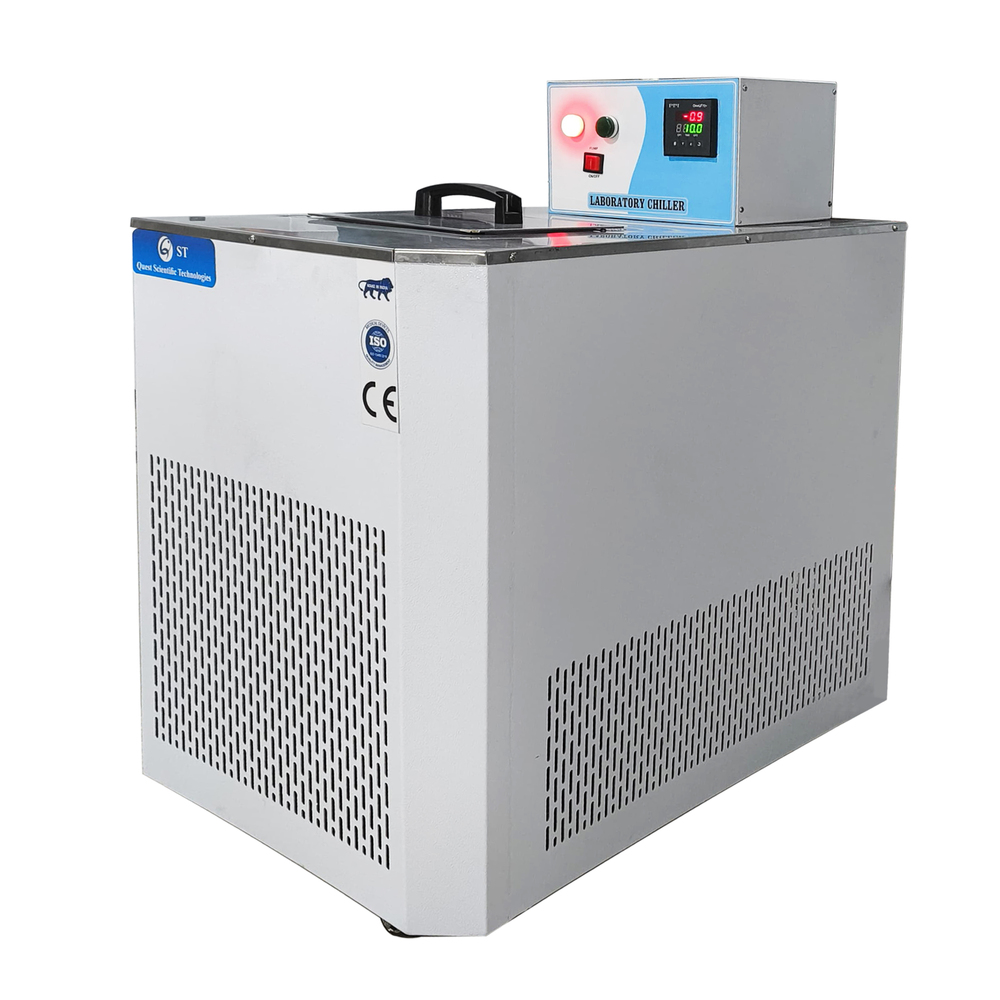
Precision Cooling Redefined: The Ultimate Guide to Recirculating Chillers
In high-stakes laboratory and industrial environments, equipment overheating isn’t just an inconvenience—it’s a risk to your data and your hardware. A recirculating chiller provides the consistent, closed-loop thermal management necessary to keep your operations running smoothly.
What is a Recirculating Chiller?
A recirculating chiller is a self-contained cooling system that provides a continuous flow of temperature-controlled liquid to an external device. Unlike “once-through” tap water systems, these units recycle the cooling medium (usually water or a glycol mix), making them:
- Eco-Friendly: Drastically reduces water consumption.
- Contamination-Free: The closed-loop design keeps the coolant pure and prevents scale buildup in your instruments.
- Hyper-Stable: Capable of maintaining temperatures with a precision often as tight as $\pm0.1$°C.
How It Works: The Closed-Loop Advantage
The magic happens in a four-step cycle that ensures heat is moved away from your application efficiently:
- Circulation: A pump pushes cold fluid to your equipment.
- Heat Exchange: The fluid absorbs waste heat from the device.
- Refrigeration: The warmed fluid returns to the chiller, where a refrigerant circuit (compressor, condenser, and evaporator) removes the heat.
- Repeat: The chilled fluid is pushed back out to the equipment.
Top Applications for Recirculating Chillers
These units are the workhorses of several high-tech industries:
- Analytical Instrumentation: Essential for ICP-MS, NMR, and XRD systems that require stable detectors.
- Semiconductor Manufacturing: Cooling etching and deposition tools.
- Laser Systems: Keeping high-power industrial and medical lasers from thermal drifting.
- Rotary Evaporation: Providing the low temperatures needed to condense volatile solvents in chemistry labs.
Choosing Your Chiller: Key Technical Specs
Selecting the wrong unit can lead to “short-cycling” or insufficient cooling. Pay close attention to:
| Specification | Why It Matters |
| Cooling Capacity | Ensure the unit can handle the total BTU or Watt output of your machine. |
| Pump Performance | Measured in L/min or PSI; determines if the fluid can reach high-resistance equipment. |
| Temperature Range | Most units span from $-20$°C to $+40$°C, but specialized units go much lower. |
| Reservoir Size | Larger tanks provide better thermal “inertia,” leading to more stable temperatures. |
Maintenance & Efficiency Tips
To maximize the lifespan of your recirculating chiller:
- Coolant Quality: Use distilled water or specific inhibited glycols. Never use straight tap water, as mineral deposits will eventually clog the heat exchanger.
- Airflow Clearance: Ensure air-cooled chillers have at least 1–2 feet of clearance around the vents to prevent “heat soaking.”
- Filter Checks: Regularly clean or replace the air and fluid filters to maintain optimal flow rates.
Summary: Why Switch to Recirculating Cooling?
While the initial investment is higher than using tap water, a recirculating chiller pays for itself through lower utility bills, increased equipment lifespan, and higher experimental reproducibility. It is the gold standard for any facility where temperature-sensitive results are non-negotiable.
- Generate a meta description for this article
- Create a list of long-tail keywords for chillers
- Draft a product comparison table for chillers