
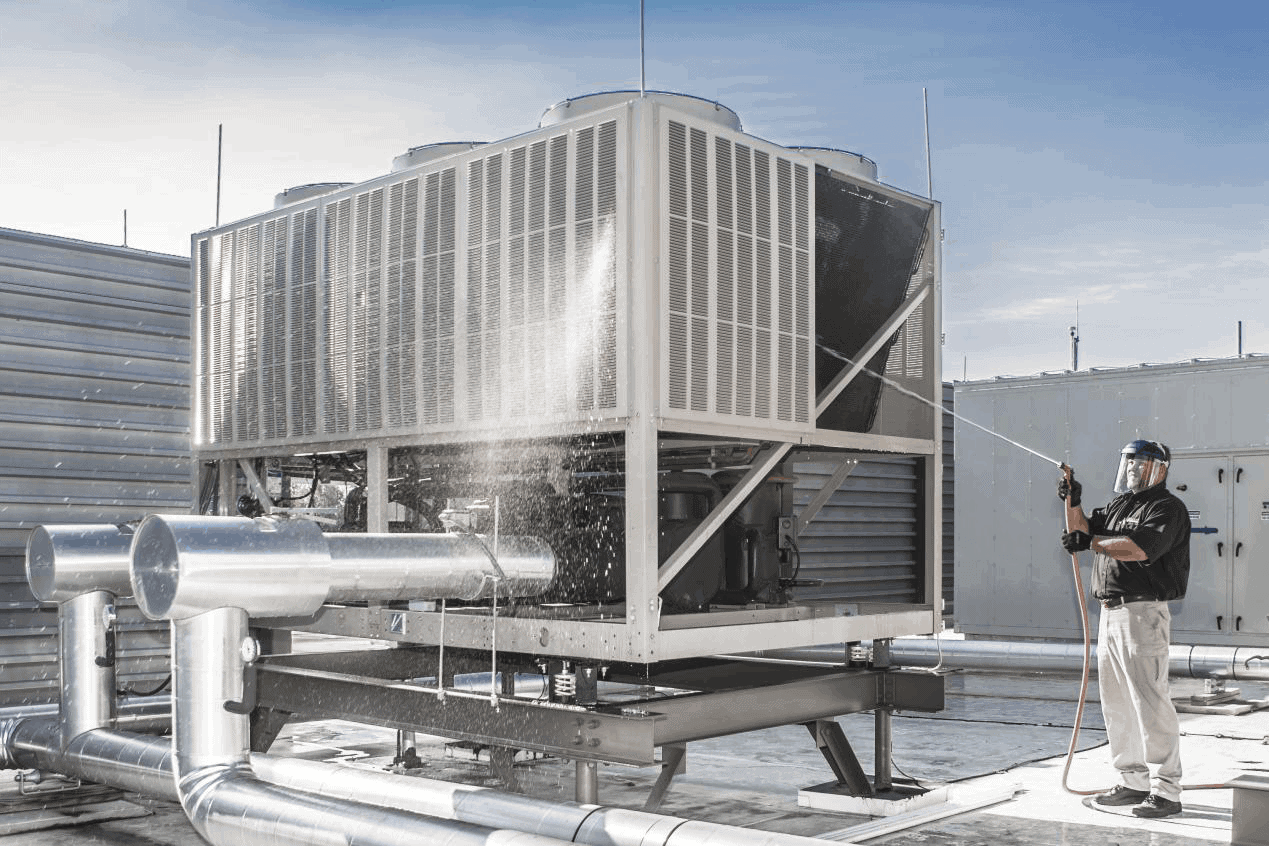
Maintaining Peak Performance, Preventing Downtime & Protecting Investment
Round cooling towers (also called bottle-type FRP cooling towers) are among the most popular cooling solutions across industries like plastics, textiles, pharmaceuticals, power plants, and HVAC systems. Their circular design offers 360-degree air intake, space efficiency, and minimal noise, making them ideal for both industrial and commercial facilities.
However, to ensure these towers operate at maximum thermal efficiency, minimum power consumption, and optimal water usage, regular maintenance is not optional — it’s essential.
This comprehensive guide will walk you through:
- The importance of maintenance
- Key components requiring regular checks
- Water treatment essentials
- Suggested cleaning schedules
- And the long-term benefits of a proactive maintenance approach
Why Maintenance of Round Cooling Towers Is Critical
Round cooling towers operate on the principle of evaporative cooling, where hot water is sprayed over fill media and comes in contact with air to release heat. However, over time, the accumulation of scale, algae, dust, and mechanical wear can seriously hinder performance.
If left unchecked, issues like:
- Reduced cooling capacity
- Higher power consumption
- Biofouling and corrosion
- Poor water quality
- Fan vibration or motor failure
can cause severe downtime and even system shutdowns.
Major Components That Require Maintenance
Here’s a breakdown of each major component that needs periodic servicing in a round cooling tower:
Fan Assembly (Axial Fan + Motor)
The fan is responsible for drawing air into the system. If the blades accumulate dust or become imbalanced, it can lead to vibration, motor overload, or even bearing failure.
Maintenance Tasks:
- Inspect for blade wear, cracks, and corrosion
- Balance fan blades and check for wobble
- Lubricate motor and bearings
- Check belt tension (in belt-driven systems)
Fill Media (Heat Exchange Surface)
This is the heart of the heat transfer process. Scaling, dirt, and slime reduce the surface area available for heat rejection.
Maintenance Tasks:
- Inspect fill packs for blockage, discoloration, and algae
- Clean using water spray or mild anti-scaling solution
- Replace any broken, sagging, or brittle sheets
- Ensure even water distribution over the entire fill area
Drift Eliminators
These stop fine water droplets (drift) from being carried out with air. Without proper maintenance, drift can cause water loss, damage nearby equipment, and create health hazards.
Maintenance Tasks:
- Clean to remove dust, slime, and dirt
- Check for missing or dislodged baffles
- Replace if warped or broken
- Realign if airflow direction is compromised
Nozzles & Rotary Sprinkler Assembly
The rotary sprinkler distributes hot water evenly over the fill. If nozzles clog or the arm stops rotating, cooling becomes uneven and ineffective.
Maintenance Tasks:
- Check nozzle spray pattern and pressure
- Remove blockages caused by debris or scale
- Clean using soft brushes or pressurized water
- Ensure sprinkler arm spins freely without resistance
FRP Shell & Structure
The round tower’s outer shell and frame ensure structural integrity. Over time, UV exposure and vibration can lead to cracks, leaks, or joint loosening.
Maintenance Tasks:
- Inspect for cracks, delamination, or discoloration
- Tighten all bolts and check support frames
- Patch or recoat any damaged FRP areas
- Re-seal joints as necessary
Cold Water Basin (Sump)
The basin collects cooled water before recirculation. Dirt, rust, and algae often settle here, affecting water quality and pump operation.
Maintenance Tasks:
- Drain and clean monthly
- Remove settled debris and biological growth
- Inspect float valves and overflow outlets
- Disinfect the basin during deep cleans
Importance of Water Treatment
Water is the working medium in any cooling tower. If left untreated, it can cause:
- Scale buildup from calcium/magnesium
- Corrosion due to pH imbalances or dissolved oxygen
- Algae and bacterial growth, including dangerous Legionella
Key Water Treatments:
- Scale inhibitors to prevent mineral deposition
- Biocides to kill algae and microbes
- pH stabilizers to prevent corrosion
- TDS control via blowdown or filtration
Suggested Maintenance Schedule
| Maintenance Activity | Recommended Frequency |
|---|---|
| Visual inspection | Weekly |
| Fan and motor check | Monthly |
| Fill media cleaning | Quarterly |
| Nozzle and sprinkler cleaning | Quarterly |
| Basin deep cleaning | Monthly |
| Water chemistry testing | Weekly/Biweekly |
| Drift eliminator inspection | Quarterly |
| Complete shutdown maintenance | Every 6 months |
Consequences of Poor Maintenance
Failing to maintain your cooling tower can lead to:
- 20–40% reduction in thermal efficiency
- Increased electricity bills due to overloaded fans and pumps
- Premature failure of motors, fill packs, and bearings
- Non-compliance with water and air emission regulations
- Potential health risks from microbial growth
Round cooling towers are simple, effective, and affordable—but only when cared for consistently. With regular inspections, water treatment, cleaning, and proactive part replacement, you can:
- Extend the life of your tower by 5–10 years
- Improve system-wide energy efficiency
- Avoid emergency breakdowns and water waste
- Ensure environmental safety and compliance