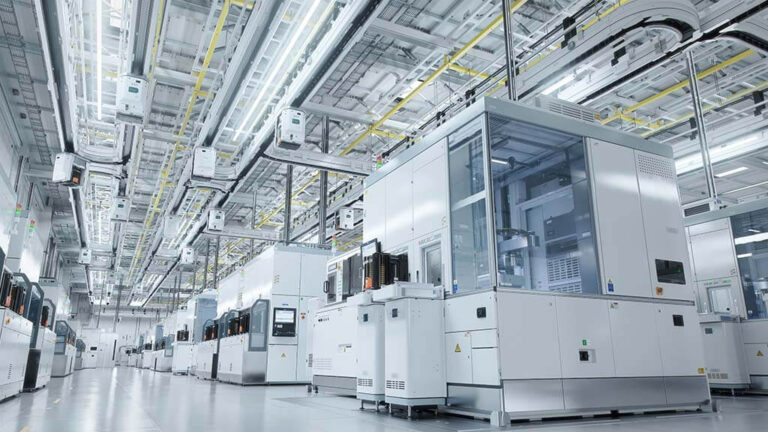
Here is an SEO-friendly content structure designed to rank for keywords related to semiconductor manufacturing chillers.
This content is optimized for search engines (using clear headings, keyword placement, and high-value terms) while remaining highly engaging and authoritative for B2B buyers like process engineers and procurement managers.
Precise Temperature Control: The Ultimate Guide to Semiconductor Manufacturing Chillers
In the world of semiconductor fabrication, precision isn’t just a goal—it’s a survival metric. As microchips shrink and wafer complexity grows, even a micro-fraction of a degree in temperature fluctuation can ruin an entire batch of silicon wafers, costing microelectronics manufacturers millions.
At the heart of this delicate thermal management ecosystem is the semiconductor manufacturing chiller.
Whether you are optimizing a cleanroom for etching, lithography, or chemical vapor deposition (CVD), understanding how to select and maintain the right industrial chiller is critical to maximizing uptime and yield.
Why Temperature Control Dictates Semiconductor Yield
Semiconductor fabrication involves hundreds of sequential steps, many of which generate extreme localized heat or require ultra-low temperatures. A dedicated semiconductor chiller provides the stable, closed-loop cooling necessary to keep these processes within strict tolerances (often down to $\pm 0.1^\circ\text{C}$ or better).
Without precise thermal management, fabs face severe consequences:
- Wafer Warping & Defects: Thermal stress can cause microscopic misalignments in circuitry.
- Inconsistent Etch Rates: Plasma etching is highly sensitive to temperature; variations lead to uneven feature depths.
- Equipment Downtime: Overheated RF generators, turbo pumps, or lasers will trigger automatic safety shutdowns, halting production lines.
Key Semiconductor Processes That Require Advanced Chilling
Modern wafer fabs utilize specialized chillers across several critical stages of the manufacturing pipeline:
1. Photolithography
Deep Ultraviolet (DUV) and Extreme Ultraviolet (EUV) lithography systems use incredibly powerful lasers to print circuit patterns. Chillers keep the optics, laser sources, and wafer stages perfectly cooled to prevent thermal expansion from distorting the pattern.
2. Plasma Etching & Ashing
Etch processes utilize high-energy plasma to remove materials. Chillers regulate the temperature of the electrostatic chuck (ESC) holding the wafer, ensuring uniform material removal across the entire silicon surface.
3. Deposition (CVD, PVD, ALD)
Chemical Vapor Deposition and Physical Vapor Deposition require precise temperature control to ensure thin films adhere uniformly to the wafer. Chillers manage the thermal load of the vacuum chambers and deposition heads.
Critical Features of High-Performance Semiconductor Chillers
When sourcing a chiller for cleanroom or sub-fab environments, standard industrial chillers won’t cut it. Look for these semiconductor-specific features:
| Feature | Why It Matters for Semiconductor Fabs |
| Ultra-Precise PID Control | Maintains temperature stability within $\pm0.1^\circ\text{C}$ to $\pm0.01^\circ\text{C}$ to prevent process drift. |
| Deionized (DI) Water Compatibility | Requires specialized, non-corrosive materials (like stainless steel, titanium, or fluoropolymers) to handle high-purity DI water. |
| Dual-Channel Cooling | Allows a single chiller unit to independently control two different temperatures simultaneously (e.g., cooling both the source and the chuck). |
| SEMI S2/S8 Compliance | Ensures the equipment meets strict environmental, health, and safety standards required for semiconductor environments. |
| Compact Footprint | Cleanroom and sub-fab real estate is incredibly expensive; chillers must offer high cooling density in a small package. |
Choosing the Right Coolant: Fluorinated vs. DI Water
The choice of heat transfer fluid is pivotal in semiconductor manufacturing.
- Deionized (DI) Water: Highly efficient for heat transfer but requires strict monitoring of resistivity to prevent corrosion and electrical conductivity issues.
- Fluorinated Fluids (e.g., Galden®, Fluorinert™): Excellent dielectric properties, meaning they do not conduct electricity. This makes them ideal for high-voltage environments like RF generators, though they require robust sealing to prevent evaporation and emissions.
Boost Your Fab’s Efficiency with Expert Thermal Solutions
As the semiconductor industry pushes toward smaller nodes ($3\text{nm}$, $2\text{nm}$, and beyond), the margin for thermal error is virtually zero. Investing in a reliable, high-stability semiconductor manufacturing chiller is the most direct way to safeguard your equipment, stabilize your process, and maximize your wafer yield.
Ready to optimize your cleanroom thermal management?
[Contact our engineering team today] to discuss custom-engineered chiller solutions tailored to your specific fab footprint and process requirements.
SEO Optimization Notes for the Backend (Meta Tags):
- Target Primary Keyword: Semiconductor manufacturing chiller, semiconductor chiller
- Secondary Keywords: Wafer fabrication cooling, cleanroom chiller, precise temperature control semiconductor, process chiller for etching, SEMI S2 compliant chiller.
- Meta Description: Discover how high-precision semiconductor manufacturing chillers protect wafer yield, manage extreme thermal loads, and ensure $\pm0.1^\circ\text{C}$ stability in critical fab processes like etching and lithography.