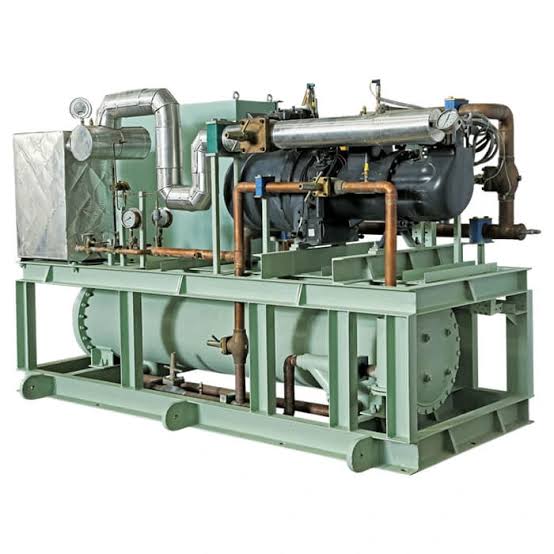
Here is a highly optimized, SEO-friendly content structure designed to rank for keywords related to textile industry chillers.
This content is structured to target primary keywords like “textile industry chiller,” “chilling system for textile mill,” and “industrial water chiller for fabric manufacturing,” while providing genuine value to readers.
Reliability in Every Thread: Premium Industrial Chillers for the Textile Industry
In the fast-paced world of textile manufacturing, precision isn’t just a goal—it’s a requirement. From the initial spinning of yarn to the final dyeing and finishing of fabrics, temperature control plays a massive, often invisible role in product quality.
An unstable thermal environment can lead to snapped threads, inconsistent dye lots, and costly equipment downtime. That’s where a high-performance textile industry chiller becomes the backbone of your production line.
Why Temperature Control Matters in Textile Manufacturing
Textile machinery operates at incredibly high speeds, generating massive amounts of friction and heat. Without a dedicated industrial chilling system, you risk compromised product integrity and premature equipment failure.
A specialized textile chiller regulates critical processes across your facility:
- Yarn Extrusion & Spinning: Prevents synthetic fibers (like polyester and nylon) from melting or weakening during high-speed extrusion.
- Dyeing & Finishing: Precise temperature control ensures consistent color absorption and prevents bleeding or uneven shades.
- Laser Cutting & Printing: Keeps advanced digital fabric printers and laser cutters operating within safe thermal limits to avoid distortion.
- Machine Longevity: Cools hydraulic systems and lubricants in weaving and knitting machines, drastically reducing wear and tear.
Key Features of Our Textile Chilling Systems
Not all industrial chillers are built to handle the unique challenges of a textile mill. Our chillers are engineered specifically to thrive in lint-heavy, high-demand environments.
| Feature | How It Benefits Your Textile Mill |
| Lint & Dust Filtration | Advanced air filtration prevents airborne fibers from clogging the condenser, ensuring uninterrupted cooling. |
| Precise Microprocessor Control | Maintains temperatures within $\pm 0.5^\circ\text{C}$ to guarantee perfect dye consistency and material strength. |
| Anti-Corrosive Exchangers | Heavy-duty evaporators and condensers resist damage from chemical-laden water used in dyeing processes. |
| Energy-Efficient Compressors | Features smart variable-frequency drives (VFD) that scale cooling power up or down, cutting your energy bills. |
Choosing the Right Chiller: Air-Cooled vs. Water-Cooled
Depending on your facility’s layout and water availability, you will typically choose between two primary chilling configurations:
1. Air-Cooled Chillers
Best for facilities where water is scarce or expensive. These systems use ambient air to reject heat, feature a compact footprint, and require minimal maintenance. Ideal for smaller weaving mills or localized printing setups.
2. Water-Cooled Chillers
Best for large-scale textile plants with access to a cooling tower. They offer superior energy efficiency and higher cooling capacities, making them perfect for massive dyeing houses and continuous extrusion lines.
💡 Maximizing ROI: The Cost of Ignoring Thermal Control
Investing in a dedicated textile chiller isn’t just an equipment upgrade—it’s an insurance policy. A single batch of ruined fabric or a week of downtime on a main spinning line can cost significantly more than the price of a premium chilling system.
Upgrade Your Production Efficiency Today
Don’t let fluctuating temperatures pull the thread on your product quality. Our team of thermal dynamics experts specializes in sizing and customizing industrial chillers tailored exactly to your textile facility’s volume and climate requirements.