
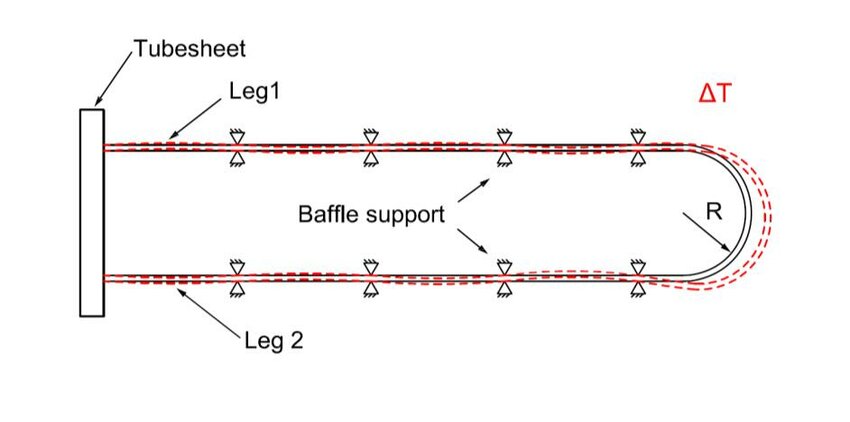
One of the most critical challenges in heat exchanger design is managing thermal expansion, which occurs due to the varying temperatures of fluids passing through the system. U-tube heat exchangers are specifically engineered to handle this challenge with remarkable efficiency. Their unique curved tube design allows for natural expansion and contraction of tubes under high-temperature differences, eliminating the risk of mechanical stress and material fatigue that often affect straight tube configurations. This flexibility makes U-tube heat exchangers highly reliable in applications where sudden temperature fluctuations are common.
Unlike fixed or straight tube designs, U-tube heat exchangers provide excellent thermal stress management without requiring complex expansion joints. As the tube bundle expands and contracts freely within the shell, the system reduces the likelihood of tube rupture, cracks, or leaks caused by uneven stress distribution. This feature not only enhances the operational life of the heat exchanger but also minimizes downtime and repair costs, ensuring uninterrupted industrial operations.
Industries such as power generation, oil refineries, chemical processing, and marine applications prefer U-tube systems because of their ability to adapt to extreme temperature variations without compromising efficiency. By allowing smooth handling of expansion, these exchangers maintain consistent thermal transfer performance, which is vital for maintaining energy efficiency and reducing fuel costs. The design also makes U-tube exchangers suitable for high-pressure systems, where both safety and reliability are of utmost importance.
Overall, thermal expansion management in U-tube systems is a key factor that sets them apart from other heat exchanger designs. Their natural ability to absorb stress, coupled with ease of maintenance and durability, makes them a top choice for industries requiring dependable, long-term performance. Investing in U-tube heat exchangers not only safeguards equipment against thermal fatigue but also ensures optimized energy usage, lower operational costs, and maximum return on investment.