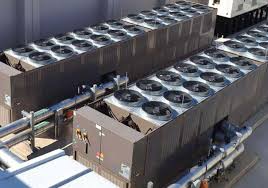
Maximize Power Plant Efficiency: A Complete Guide to Turbine Inlet Cooling (TIC) Chillers
In the world of power generation, efficiency is the name of the game. However, as ambient temperatures rise, gas turbine performance often takes a hit. This is where Turbine Inlet Cooling (TIC) Chillers become a game-changer.
By cooling the intake air, these systems allow power plants to maintain peak output even during the hottest summer days. Here is everything you need to know about how TIC chillers work, their benefits, and why they are a critical investment for modern energy facilities.
Why Gas Turbines Struggle in the Heat
Gas turbines are constant-volume machines. They rely on the density of the intake air to produce power.
- The Problem: On hot days, air expands and becomes less dense.
- The Result: The turbine has to work harder to compress the “thinner” air, leading to a significant drop in power output and fuel efficiency.
How Turbine Inlet Cooling Chillers Work
A TIC chiller system cools the ambient air before it enters the turbine compressor. By reducing the air temperature—often to a consistent $15°C$ ($59°F$)—the air becomes denser, allowing the turbine to mass-flow more air and generate more electricity.
The process generally follows these steps:
- Chilled Water Production: A mechanical chiller (centrifugal or screw) cools water or a glycol solution.
- Heat Exchange: The chilled fluid is pumped to a cooling coil (heat exchanger) located in the turbine’s inlet air filter house.
- Air Cooling: As hot ambient air passes over the coils, it loses heat to the fluid.
- Density Boost: The now-cold, dense air enters the turbine, mimicking “winter-like” operating conditions year-round.
Key Benefits of TIC Chiller Systems
1. Increased Power Output
The most immediate benefit is the “capacity boost.” A TIC system can increase a gas turbine’s power output by 10% to 30% depending on the local climate and the specific turbine model.
2. Enhanced Heat Rate (Fuel Efficiency)
When the air is cooler, the turbine operates more efficiently. This improves the Heat Rate, meaning you get more megawatts for every unit of fuel burned.
3. Predictable Energy Delivery
For power providers, reliability is key. TIC chillers eliminate the unpredictability of weather, ensuring that the plant can meet high demand during summer peaks when electricity prices are often at their highest.
4. Extended Equipment Life
By stabilizing the compressor inlet temperature, TIC systems reduce the thermal stress on internal turbine components caused by fluctuating ambient conditions.
Types of Cooling Technologies
While mechanical chillers are highly effective, they aren’t the only option. Choosing the right one depends on your specific needs:
| Technology | Best For… | Key Advantage |
| Mechanical Chillers | High humidity and high heat | Precise temperature control regardless of ambient humidity. |
| Evaporative Cooling | Arid, dry climates | Lower capital cost and simple operation. |
| Thermal Energy Storage (TES) | Peak-load shifting | Chill water at night (low cost) and use it during the day. |
Is a TIC Chiller Right for Your Facility?
Investing in Turbine Inlet Cooling is an ROI-driven decision. If your facility experiences high ambient temperatures and you want to capture “lost” megawatts during peak demand, a chiller system is often the most effective solution.
Pro Tip: When evaluating TIC systems, consider a Modular Chiller Plant. These are factory-assembled, skid-mounted units that allow for faster installation and lower on-site construction costs.
Conclusion
Turbine Inlet Cooling chillers are more than just an “add-on”—they are a strategic upgrade for any gas-fired power plant looking to stay competitive. By decoupling performance from the weather, you ensure higher revenue, better efficiency, and a more resilient grid.