
When writing for Vapor Compression Chillers, you are targeting a highly technical audience of HVAC engineers, facility managers, and industrial procurement officers. To rank well, you need to focus on keywords like efficiency, refrigeration cycle, and operational costs.
Here are several SEO-optimized title options and a comprehensive content structure tailored for this niche.
🏆 Optimized Title Options
- The Technical Authority: Vapor Compression Chillers: Understanding the Core of Industrial Refrigeration
- Efficiency Focused: Maximizing HVAC Efficiency with Modern Vapor Compression Chiller Technology
- The Buyer’s Guide: Vapor Compression vs. Absorption Chillers: Which is Right for Your Facility?
- Performance Oriented: How Vapor Compression Chillers Deliver High-Performance Cooling in Industrial Settings
🏗️ SEO Content Structure
1. Introduction: The Heart of Industrial Cooling
Define the system immediately to capture the “What is…” search intent.
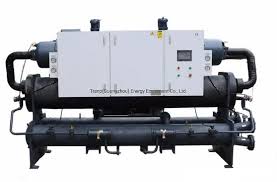
A Vapor Compression Chiller is a mechanical refrigeration system that uses a circulating liquid refrigerant as the medium which absorbs and removes heat from the space to be cooled and subsequently rejects that heat elsewhere. It is the most widely used cooling technology for both commercial and industrial applications.
2. The Four Stages of the Vapor Compression Cycle
Search engines value clear, step-by-step technical explanations. Use a list to break down the process:
- Compression: The compressor (Screw, Centrifugal, or Reciprocating) raises the pressure and temperature of the refrigerant vapor.
- Condensation: High-pressure vapor travels to the condenser where it rejects heat and turns into a high-pressure liquid.
- Expansion: The liquid refrigerant passes through an expansion valve, dropping its pressure and temperature.
- Evaporation: The cold refrigerant enters the evaporator, absorbing heat from the process water, and turns back into a vapor to repeat the cycle.
3. Key Benefits of Vapor Compression Technology
Use a table to highlight the advantages that decision-makers look for:
| Feature | Industrial Advantage |
| High COP | Offers a high Coefficient of Performance (COP) compared to other cooling methods. |
| Compact Design | Requires less physical space than absorption systems of similar capacity. |
| Rapid Cooling | Provides faster temperature pull-down for sensitive industrial processes. |
| Versatility | Compatible with air-cooled or water-cooled condenser configurations. |
4. Common Compressor Types
Incorporate “long-tail” keywords by mentioning specific equipment types:
- Centrifugal Chillers: Best for high-capacity, constant-load applications.
- Screw Chillers: Ideal for medium-to-high loads with excellent part-load efficiency.
- Scroll Chillers: Perfect for smaller commercial footprints and modular setups.
5. Energy Efficiency & Sustainability (The “Green” Angle)
To rank for modern search trends, discuss the shift toward Low-GWP (Global Warming Potential) refrigerants and the integration of Variable Frequency Drives (VFDs). Mentioning how these systems handle ambient temperatures up to 50°C can also help target specific high-temperature markets.
🚀 SEO Keyword Checklist
Ensure these terms appear naturally in your subheaders:
- Refrigeration cycle
- Evaporator and Condenser performance
- Energy-efficient industrial cooling
- HVAC chiller maintenance