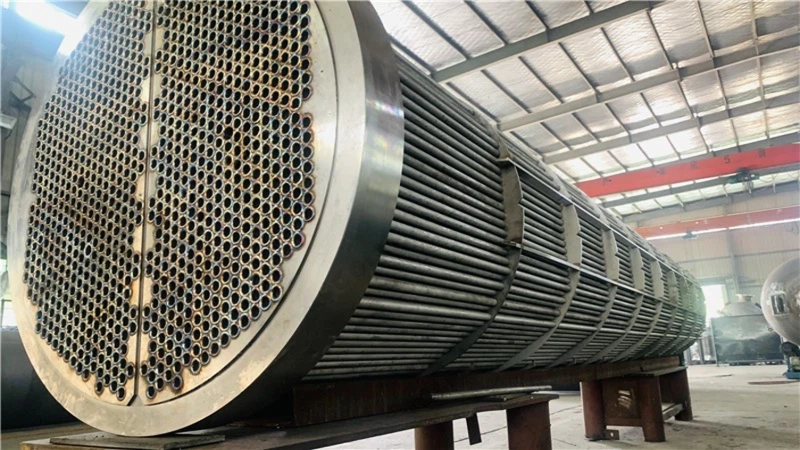
In the world of industrial cooling and heating systems, the tube bundle stands as the backbone of shell and tube heat exchangers. It is essentially a collection of tubes held together by tube sheets, baffles, and tie rods, creating the central unit where heat transfer takes place between fluids. One medium flows inside the tubes, while another flows around them within the shell, allowing efficient thermal exchange. The design, arrangement, and material of the tube bundle greatly impact the exchanger’s performance, durability, and resistance to scaling or corrosion.
The importance of tube bundles lies in their versatility and efficiency. Since they can be designed with different tube diameters, lengths, and arrangements, they cater to a wide range of industries including power generation, chemical processing, pharmaceuticals, oil refineries, and HVAC systems. Their modular structure also allows for better optimization of heat transfer rates while ensuring that high pressure and temperature conditions can be managed without compromising safety.
One of the greatest advantages of tube bundles is their replaceability and serviceability. Unlike a welded or rigid system, a tube bundle can be removed from the shell for thorough cleaning, inspection, or even replacement without dismantling the entire heat exchanger. This makes them highly cost-effective in the long run, as industries can continue operations with minimal downtime. Regular mechanical or chemical cleaning of tube bundles helps prevent fouling, ensuring longer equipment life and consistent thermal performance.
Beyond functionality, tube bundles also play a crucial role in sustainability. By ensuring efficient heat recovery, they help industries reduce energy waste and lower operational costs. Whether it’s cooling turbine oils, condensing steam, or heating process fluids, a well-maintained tube bundle maximizes thermal output while supporting greener and more efficient operations. Simply put, without tube bundles, modern heat exchangers would lose their adaptability, reliability, and long-term value.