In a world where sustainable industrial operations are no longer optional but essential, energy efficiency has become a top priority across sectors. One such area seeing a major transformation is cooling technology—especially with the growing use of dry cooling towers.
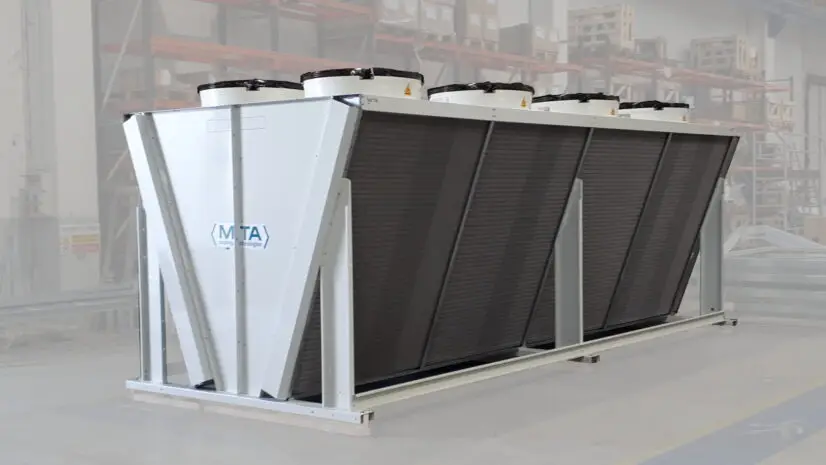
Unlike traditional wet cooling systems, dry cooling towers offer significant energy-saving potential by reducing both water and electricity consumption. Their advanced design, which includes air-cooled heat exchangers, EC/VFD-controlled fans, and closed-loop operation, makes them a go-to choice for industries aiming to lower operational costs while meeting environmental compliance.
This blog explores how dry cooling towers improve energy efficiency and why they are ideal for industries seeking high-performance, eco-conscious cooling systems.
Key Characteristics Driving Energy Efficiency in Dry Cooling Towers
Air-Cooled Heat Rejection = No Water Pumping Costs
Dry cooling towers rely on ambient air to cool process fluids, which eliminates the need for water pumping systems, makeup water lines, and bleed-off control mechanisms—all of which consume electricity.
Benefit: Saves up to 10–15% in energy compared to wet cooling towers, especially in continuous operations.
Closed-Loop System Reduces Thermal Loss
The closed-loop design ensures that the process fluid is continuously recirculated inside sealed piping, which:
- Maintains stable temperature
- Reduces heat loss
- Eliminates contamination that can impact thermal performance
Result: Consistent efficiency, minimal need for system corrections or flushing.
EC (Electronically Commutated) or VFD-Controlled Fans
Dry cooling towers are typically equipped with:
- EC axial fans or
- VFD (Variable Frequency Drive) controlled motors
These fans dynamically adjust speed based on:
- Ambient temperature
- Load demands
- Time-of-day usage
Energy Saving: Up to 40% lower power consumption compared to fixed-speed fans.
No Evaporation = No Heat of Vaporization Loss
Wet towers lose significant energy due to the latent heat of evaporation. Since dry towers don’t use evaporation, there’s:
- No heat loss through vapor
- No additional fan power needed to push saturated air
Efficiency Impact: Direct reduction in auxiliary power load.
Smart Control Systems and Thermal Sensors
Modern dry towers come with automated control panels that integrate:
- Ambient temperature sensors
- Fluid inlet/outlet temperature sensors
- Load-adjusted fan controls
This ensures precision-based fan operation, preventing unnecessary overuse and energy waste.
✅ Best for: Data centers, process plants, or any location with variable thermal loads.
Modular Design Reduces Load per Unit
Dry cooling systems are built with modular cells, which can be operated independently. During low load times, some units can shut down completely, reducing electrical consumption drastically.
Bonus: Easy to scale-up or down without high energy spikes.
Industries That Benefit Most from Energy-Efficient Dry Cooling Towers
- Pharmaceutical plants — maintain thermal stability with minimal energy draw
- Data centers — avoid thermal spikes without high power bills
- Power generation plants — consistent cooling with load-based energy usage
- Petrochemical & refineries — reliable heat rejection with lower OPEX
- Green buildings & LEED projects — energy efficiency helps meet compliance
Dry cooling towers are no longer just an alternative—they’re becoming the industry standard for companies looking to cut power costs, reduce emissions, and meet net-zero energy targets. With VFD fans, closed-loop systems, intelligent controls, and zero water usage, these towers offer a level of energy efficiency unmatched by traditional cooling systems.
Whether you operate a data center, power plant, manufacturing unit, or a high-rise HVAC project, investing in energy-efficient dry cooling towers pays off in lower OPEX, improved system reliability, and sustainability credits.
Call to Action
Looking to upgrade to an energy-efficient dry cooling tower?
Contact us today for tailored solutions that match your load requirements and environmental goals.