To rank well for Process Fluid Chillers, your content needs to balance technical authority with clear solutions for industrial pain points. Here is a structured, SEO-optimized content outline designed to capture high-intent search…

Heat pump chiller
To rank for Heat Pump Chiller in 2026, you need to target a mix of "Sustainability" and "Operational Efficiency" keywords. Modern SEO favors content that proves how these systems replace traditional boilers and…
Outdoor industrial chiller
Maximize your facility’s floor space without sacrificing cooling power. An Outdoor Industrial Chiller is the rugged, weather-resistant solution designed to provide high-capacity thermal management while standing up to the harshest environmental elements. Here…
Hazardous area chiller
In industrial sectors where volatile gases, dust, or flammable vapors are a daily reality, standard cooling equipment is a liability. A Hazardous Area Chiller is engineered to perform where others can’t, providing robust…
Cryogenic chiller
In the world of extreme temperature science, standard refrigeration just doesn't cut it. A Cryogenic Chiller is the bridge between industrial cooling and absolute thermal control, capable of reaching temperatures well below $-60°C$…
Explosion-proof chiller
In high-risk industrial environments, safety isn't just a requirement—it’s a lifeline. An Explosion-Proof Chiller is specifically engineered to operate safely in atmospheres where flammable gases, vapors, or dust are present. Whether you are…
Custom Industrial Oil Chiller
In many high-stakes manufacturing environments, "off-the-shelf" cooling solutions often fall short. Whether you are dealing with extreme ambient temperatures, hazardous environments, or unique spatial constraints, a Custom Industrial Oil Chiller is the only…
Industrial Gearbox Oil Chiller
In high-torque industrial operations, the gearbox is the powerhouse of the production line. However, internal friction and heavy loads generate immense heat that can quickly degrade gear oil. An Industrial Gearbox Oil Chiller…
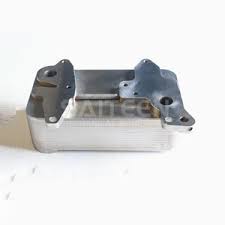
Heavy Equipment Oil Chiller
In the world of earthmoving, mining, and heavy construction, heat is the primary cause of hydraulic and engine failure. Heavy Equipment Oil Chillers are the specialized systems that prevent your fleet from overheating…
Furnace Oil Chiller
In high-heat industrial environments, Furnace Oil (FO)—also known as Fuel Oil or LDO—must be maintained at precise temperatures to ensure clean combustion and mechanical reliability. A Furnace Oil Chiller is the critical component…
Heat Transfer Oil Chiller
In high-temperature industrial processes, Heat Transfer Oil (HTO) is the lifeblood of your system. While these oils are designed to carry heat, they must be cooled precisely to prevent "cracking," oxidation, and system…
Marine Engine Oil Chiller
In the harsh environment of the open sea, your engine's reliability is its most important asset. A Marine Engine Oil Chiller (often integrated as a high-performance heat exchanger) is the critical line of…
Extrusion Line Oil Chiller
In high-volume extrusion, the gearbox is the heart of the operation. As the screw turns to process plastic, rubber, or food products, the sheer torque generates massive internal heat. Without an Extrusion Line…

Injection Moulding Machine Oil Chiller
In the high-pressure world of plastic injection moulding, cycle time is money. If your hydraulic oil overheats, your machine slows down, seals perish, and your part consistency vanishes. An Injection Moulding Machine (IMM)…
CNC Machine Oil Chiller
In the world of high-precision machining, thermal stability is the difference between a perfect part and a scrap piece. As CNC spindles spin at tens of thousands of RPMs, the heat generated can…
Power Pack Oil Chiller
A Hydraulic Power Pack Oil Chiller is the heartbeat of any heavy-duty hydraulic system. When oil temperatures rise, seals fail, valves stick, and your entire production line grinds to a halt. Here is…
Rolling Mill Oil Chiller
In a rolling mill, heat is the enemy of precision. As metal passes through the rollers at high speeds, friction and deformation generate massive amounts of thermal energy. Without a robust Rolling Mill…
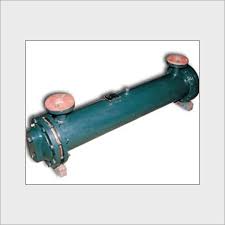
Quenching Oil Chiller
Quenching is a high-stakes game. If your oil temperature fluctuates, your metal parts pay the price in distortion, cracking, or inconsistent hardness. A Quenching Oil Chiller is the unsung hero that keeps your…
Cutting Oil Chiller
For Cutting Oil Chillers, the SEO strategy focuses on surface finish quality, tool life extension, and maintaining dimensional tolerances. This content is designed to attract CNC shop managers, precision automotive manufacturers, and heavy-duty…
Spindle Oil Chiller
For Spindle Oil Chillers, the SEO strategy focuses on machining precision, thermal growth prevention, and high-speed CNC reliability. This content is tailored for CNC machinists, precision engineers, and shop owners who need to…
Transformer Oil Chiller
For Transformer Oil Chillers, the SEO strategy revolves around grid reliability, preventing insulation breakdown, and extending the life of high-value electrical assets. This content is designed for substation managers, utility engineers, and industrial…
Turbine Oil Chiller
For Turbine Oil Chillers, the SEO strategy focuses on power plant reliability, bearing protection, and preventing varnish formation. This content is designed to reach operations managers and engineers in power generation, marine propulsion,…
Compressor Oil Chiller
For Compressor Oil Chillers, the SEO strategy focuses on preventing air compressor overheating, maintaining lubricant viscosity, and ensuring 24/7 industrial uptime. This content is designed for facility managers and maintenance engineers in sectors…
Gear Oil Chiller
For Gear Oil Chillers, the SEO strategy focuses on high-torque reliability, industrial gearbox protection, and energy efficiency. This content is designed to reach maintenance managers in heavy industries like mining, wind energy, and…
Lubrication Oil Chiller
For Lubrication Oil Chillers, the SEO focus centers on bearing protection, gear life, and high-speed spindle accuracy. This content is designed to attract maintenance engineers and OEM manufacturers who need to manage heat…
Hydraulic Oil Chiller
For Hydraulic Oil Chillers, the SEO strategy focuses on system pressure stability, preventing seal failure, and maintaining fluid viscosity. Your target audience includes plant maintenance engineers, hydraulic system designers, and operators of heavy…