
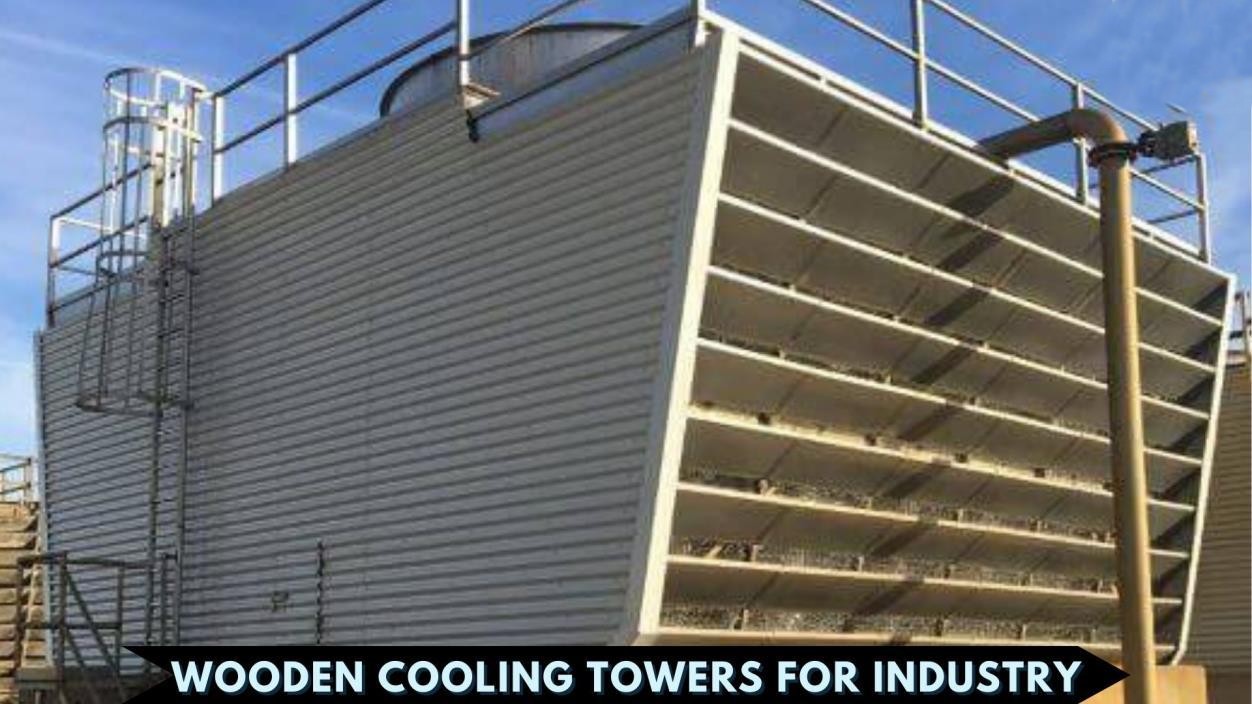
Traditional Design with Modern Performance
In the world of industrial cooling, energy efficiency is no longer a luxury—it’s a necessity. As industries strive to lower operating costs and reduce environmental impact, every component in the cooling process is being re-evaluated for performance. One such component that continues to prove its worth, even in the age of FRP and modular systems, is the wooden cooling tower.
Despite its traditional construction, the wooden cooling tower remains a powerful and energy-efficient solution, especially in high-capacity applications. Its open-air design, modular layout, and natural materials offer a balance of performance and cost-effectiveness that continues to make it relevant today.
What Makes Wooden Cooling Towers Energy Efficient?
Wooden cooling towers may seem old-school, but their energy-saving capabilities are deeply rooted in smart engineering and material science.
Optimized Air-Water Contact
The large, open-frame structure of wooden cooling towers allows for better airflow and deeper fill media installation. This improves:
- Evaporative cooling rate
- Heat rejection capacity
- Reduced fan load due to natural draft support
Result: Less energy needed to cool the same volume of water compared to smaller, enclosed towers.
Custom Sizing for Demand Load
Wooden towers are field-erected and highly customizable, allowing them to be sized accurately for specific process loads. Oversized or undersized cooling towers waste energy.
Custom design ensures:
- Lower pump head
- Reduced fan runtime
- Fewer restarts or over-cooling
Natural Sound & Vibration Absorption
Wood is naturally a sound and vibration dampener. Unlike metal or plastic structures that generate resonance and vibration, wood helps reduce the:
- Energy loss from vibration
- Load on motors and fans
- Need for vibration dampers or silencers
This passive benefit contributes to motor longevity and power stability.
Low Thermal Conductivity
Wood has a low thermal conductivity, which prevents heat from transferring back into the recirculated water through the casing. This retains cooling performance and reduces the need for fan overwork.
Compared to steel or FRP, wooden casing does not absorb external heat as quickly, making it more thermally stable in hot climates.
Energy Efficient Splash Fill Design
Wooden towers traditionally use timber or PVC splash bar fill, which encourages:
- Larger droplet formation
- Maximum air-water surface area
- Less resistance to airflow
This means:
- Lower static pressure
- Reduced fan horsepower requirements
- Natural cooling at part loads
Gravity-Driven Water Distribution Systems
Many wooden towers use non-pressurized, gravity-based water distribution troughs. These systems avoid the need for high-pressure nozzles or pumps, reducing energy consumption related to water circulation.
Operational Features That Lower Power Usage
| Feature | Energy Benefit |
|---|---|
| Wide cross-section structure | Reduces fan static pressure |
| Treated wooden frames | Require no insulation or thermal coating |
| Easy fill media cleaning | Maintains peak heat transfer over time |
| Sloped cold water basin | Improves drainage efficiency |
| Natural draft design (in some models) | Requires no fan motor at all |
Maintenance = Sustained Energy Efficiency
Well-maintained wooden cooling towers can run 20–30% more efficiently than neglected ones. Here’s how:
- Clean fill = better heat transfer
- Lubricated motors = less friction loss
- Repaired splash bars = even water distribution
- Water treatment = reduced scaling on components
Wooden Towers & Environmental Impact
Wood is a renewable, biodegradable material, unlike FRP or metal. When treated responsibly (e.g., using CCA or ACQ treatments), it offers:
- A smaller carbon footprint
- Lower embodied energy during manufacturing
- End-of-life recycling options
Combined with lower energy draw, wooden towers align well with eco-friendly operations and green building certifications.
Wooden cooling towers deliver more than just bulk water cooling. They bring:
- Energy-efficient air-water interaction
- Natural insulation properties
- Flexible design for energy optimization
- Reduced vibration, motor stress, and fan load
Whether you’re operating a power plant, textile unit, steel mill, or chemical factory, wooden cooling towers can offer long-term energy savings without compromising cooling capacity.