
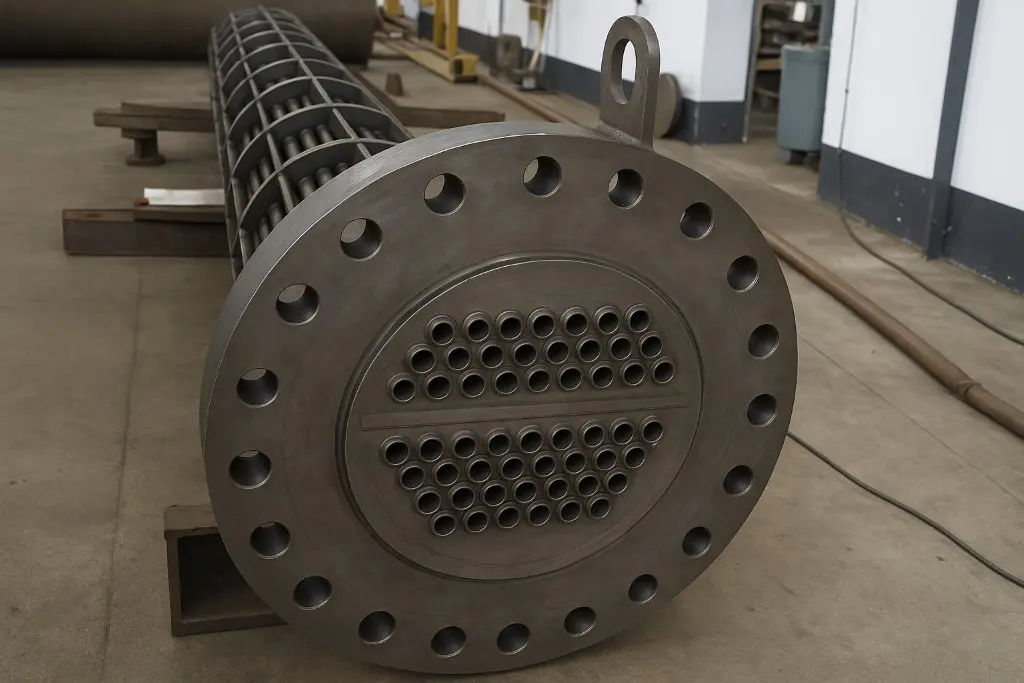
Selecting the appropriate tube bundle materials is a critical decision in the design and fabrication of high-pressure heat exchangers, directly impacting the safety, efficiency, and longevity of the equipment. While common materials like carbon steel and standard stainless steels are sufficient for many applications, extreme high-pressure environments, often found in the petrochemical, power generation, and chemical processing industries, demand superior performance. In these scenarios, advanced alloys such as Duplex stainless steel, Super Duplex stainless steel, and various nickel alloys (like Inconel and Monel) become essential. These materials offer a superior combination of high tensile strength, excellent corrosion resistance, and stability at elevated temperatures. For instance, Duplex stainless steel provides exceptional resistance to chloride stress corrosion cracking, a common failure mode in high-pressure systems exposed to saline or acidic environments, making it a go-to choice for offshore oil and gas platforms and desalination plants.
Beyond material selection, the manufacturing and fabrication techniques play a crucial role in ensuring the integrity of high-pressure tube bundles. For materials like Super Duplex or Inconel alloys, specialized welding procedures are mandatory to prevent the formation of brittle intermetallic phases that could compromise the material’s strength and corrosion resistance. Techniques such as orbital welding and precise post-weld heat treatment are employed to maintain the desired microstructure and mechanical properties of the parent metal. Furthermore, the method of securing tubes to the tubesheet, such as hydraulic expansion or explosive bonding, is often preferred over traditional roller expansion in high-pressure applications. These advanced methods create a more robust and leak-proof seal, which is paramount for containing high-pressure fluids and preventing catastrophic failures in critical shell and tube heat exchanger systems.
Another innovative consideration in modern high-pressure applications is the use of bimetallic or clad tubes. These engineered solutions offer a cost-effective alternative to using solid high-alloy tubes throughout the entire bundle. A bimetallic tube typically consists of a corrosion-resistant inner layer (e.g., a nickel alloy) metallurgically bonded to a stronger, less expensive outer layer (e.g., carbon steel). This composite design provides the necessary corrosion protection on the process fluid side while relying on the outer material for structural strength against high external or internal pressures. This approach optimizes material usage, reduces overall project costs, and ensures the heat exchanger design meets stringent performance and safety standards without over-engineering the entire component with expensive alloys. This strategic material combination is a hallmark of advanced heat exchanger manufacturing.
Another critical aspect to consider is the economic impact of material selection. While high-performance materials like Inconel and Titanium may come with a higher upfront cost, their durability and reduced maintenance requirements can significantly lower long-term expenses. Additionally, advancements in manufacturing technologies, such as precision welding and surface treatments, have improved the reliability and performance of tube bundles. Investing in high-quality materials not only enhances operational safety but also aligns with sustainability goals by reducing material waste and energy consumption. As industries continue to push the boundaries of high-pressure systems, innovations in Tube Bundle Materials will remain at the forefront of engineering advancements.