Adiabatic Chillers for Servers: The Future of Sustainable Data Center Cooling
As data centers consume an ever-increasing share of the world’s electricity, the pressure is on to find cooling solutions that are both hyper-efficient and environmentally responsible. Enter the adiabatic chiller—a hybrid technology that is revolutionizing how we keep server rooms cool.
By combining the best features of air-cooled and water-cooled systems, adiabatic chillers offer a “best of both worlds” approach to thermal management.
What is Adiabatic Cooling?
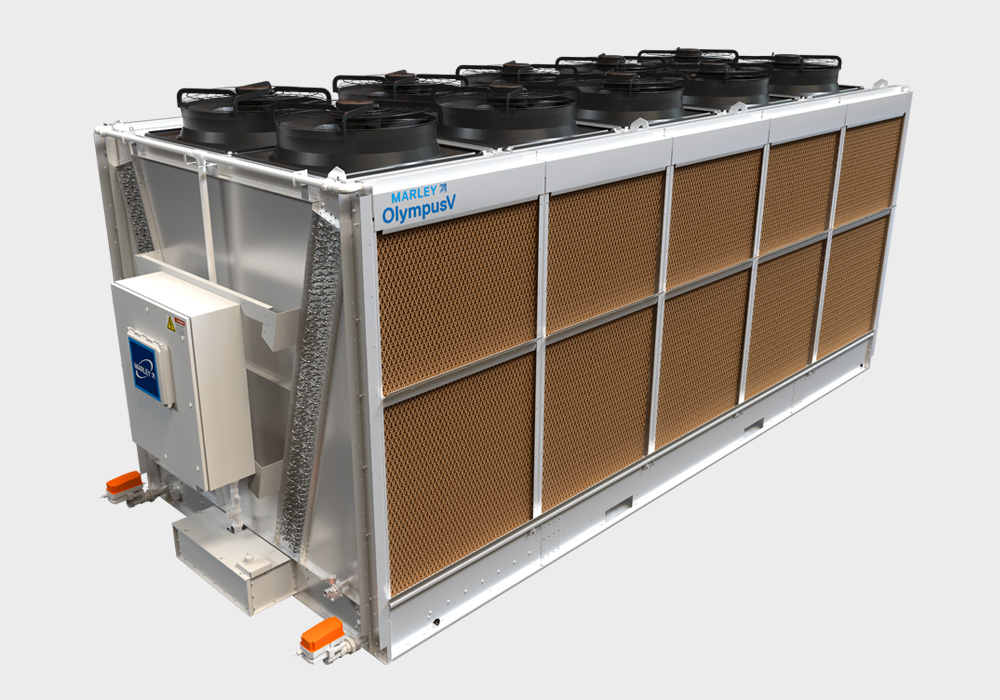
The term “adiabatic” refers to a thermodynamic process where heat is reduced through a change in air pressure caused by volume expansion. In the context of a chiller, it uses evaporative cooling to pre-cool the ambient air before it reaches the condenser coils.
How it works in 3 steps:
- Dry Mode: When ambient air is cool, the unit operates like a standard air-cooled chiller.
- Adiabatic Mode: As temperatures rise, the system wets integrated cooling pads.
- The Result: Hot intake air passes through these pads; the water evaporates, absorbing heat from the air and dropping the temperature significantly—often by 10°C to 15°C—before it even touches the cooling coils.
Why Adiabatic Chillers are Perfect for Servers
Data centers require constant, unwavering temperatures. Adiabatic systems are uniquely suited for this mission-critical environment for several reasons:
1. Massive Energy Savings (Lower PUE)
Power Usage Effectiveness (PUE) is the gold standard for data center efficiency. Adiabatic chillers significantly lower PUE by reducing the workload on compressors. On many days, the system can provide “free cooling,” using only fans and a small amount of water rather than energy-hungry refrigeration cycles.
2. Drastic Water Reduction
Unlike traditional cooling towers that consume massive amounts of water and require heavy chemical treatment, adiabatic systems are closed-loop. They only use water when the ambient temperature hits a specific threshold, reducing water consumption by up to 80% compared to traditional water-cooled systems.
3. Reliability in Extreme Heat
Server racks can’t afford a “bad day” just because there’s a heatwave. Adiabatic chillers allow data centers to maintain design-point cooling even when outdoor temperatures exceed 45°C, providing a critical buffer that standard air-cooled units lack.
Adiabatic vs. Traditional Cooling
| Feature | Standard Air-Cooled | Traditional Cooling Tower | Adiabatic Chiller |
| Energy Efficiency | Moderate | High | Very High |
| Water Usage | None | Extremely High | Low (On-demand) |
| Maintenance | Low | High (Chemicals/Legionella) | Low/Moderate |
| Climate Suitability | Temperate | All | Excel in Hot/Arid |
Key Components of a Server-Grade Adiabatic System
To ensure 24/7 server uptime, look for these specific features:
- UV Sterilization: Ensures the water used for the adiabatic pads is free of bacteria, mitigating health risks like Legionella.
- Intelligent Control Logic: Systems that automatically switch between “Dry,” “Adiabatic,” and “Mechanical” cooling modes based on real-time weather data.
- EC Fan Technology: High-efficiency fans that provide precise airflow control with minimal noise and vibration.
- Finned Coil Protection: Anti-corrosion coatings to protect the heart of the chiller from the elements.
The Sustainability Edge
With increasing regulations on Water Usage Effectiveness (WUE) and carbon footprints, adiabatic chillers help data center operators meet stringent ESG (Environmental, Social, and Governance) targets. They eliminate the need for toxic water treatment chemicals and significantly reduce the strain on local power grids.
Final Thoughts
For modern server environments, the choice is no longer just about “getting it cold.” It’s about getting it cold efficiently, reliably, and sustainably. Adiabatic chillers represent the peak of this evolution, offering a robust shield against rising global temperatures.