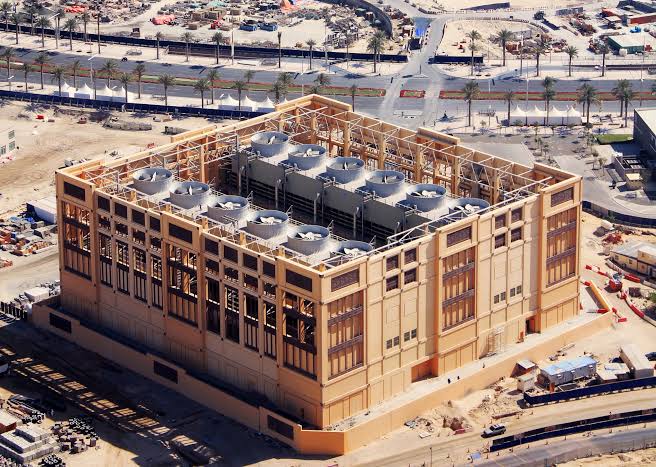
District cooling chiller
Here is high-performance, SEO-optimized content designed to rank for keywords like district cooling chillers, industrial HVAC efficiency, and centralized cooling systems.
District Cooling Chillers: The Engine Behind Sustainable Urban Cooling
As modern cities grow denser and global temperatures rise, urban centers face a massive challenge: how to keep millions of people cool without overloading the power grid or accelerating climate change.
The answer lies beneath the streets. District cooling systems (DCS) replace thousands of individual building air conditioners with a highly efficient, centralized network. And at the absolute heart of this infrastructure is the district cooling chiller.
Here is a deep dive into how these industrial giants work, why they are a massive leap forward for environmental sustainability, and how they optimize energy consumption on a city-wide scale.
What is a District Cooling Chiller?
Unlike a standard commercial chiller designed to cool a single office building, a district cooling chiller is a massive, industrial-grade machine engineered to produce chilled water for an entire district, network of skyscrapers, or massive university campus.
Instead of every building running its own roof-top units, a centralized plant houses a series of these high-capacity chillers. They cool water to roughly 4°C to 7°C (39°F to 45°F) and pump it through a network of insulated underground pipes directly into individual buildings. Once the water absorbs heat from those buildings, it cycles back to the central plant to be chilled again.
Types of Chillers Used in District Cooling
District cooling plants require unparalleled reliability and efficiency. Because they operate at such massive scales, they primarily rely on two types of technology:
- Centrifugal Chillers: These are the workhorses of district cooling. Using dynamic compression via impellers, centrifugal chillers offer incredibly high cooling capacities (often exceeding 5,000 to 10,000 tons of refrigeration per unit) and unmatched full-load efficiency.
- Absorption Chillers: These systems use heat instead of electricity to drive the cooling cycle. They are highly popular in trigeneration plants (Combined Cooling, Heating, and Power, or CCHP), where waste heat from local power generation or industrial processes is captured and repurposed to create chilled water.
The Core Benefits of District Cooling Chillers
Shifting from localized HVAC systems to centralized district cooling chillers unlocks massive economic and environmental advantages.
1. Radical Energy Efficiency
Because district cooling chillers aggregate the cooling demands of an entire city block, they operate at a much higher and more consistent load profile than scattered individual units. Furthermore, industrial chillers utilize advanced water-cooling towers and variable speed drives (VSDs) that operate at a significantly lower power consumption per ton of cooling than residential air-cooled systems.
2. Integration with Thermal Energy Storage (TES)
One of the greatest tricks of a district cooling plant is its ability to “shift” power grid demand. Chillers can run at maximum efficiency during the night—when ambient temperatures are lower and electricity is cheaper—to freeze massive tanks of water or ice. During the peak heat of the day, the plant uses this stored ice to cool the city, taking the load off the power grid.
3. Footprint and Asset Optimization
By eliminating the need for individual chillers, cooling towers, and heavy mechanical rooms, real estate developers free up valuable rooftop and basement space. This square footage can be converted into rentable office space, penthouses, or green roofs.
4. Reduced Carbon Footprint and Refrigerant Management
Centralized plants drastically lower greenhouse gas emissions by consuming up to 40% less electricity than traditional cooling setups. Additionally, managing refrigerants in a single, strictly monitored industrial facility significantly reduces the risk of leaks compared to maintaining thousands of split-system air conditioners across a city.
The Future: Smart Cities and Next-Gen Cooling
As the world pushes toward net-zero emissions, district cooling chillers are evolving. Modern installations are integrating artificial intelligence and predictive machine learning algorithms to analyze weather patterns, grid prices, and historical usage data. This allows the chillers to automatically adjust their output and optimize TES charging schedules in real-time.
For dense urban zones, master-planned communities, and massive industrial complexes, investing in centralized chiller technology is no longer just an alternative—it is the foundational infrastructure for sustainable, future-proof cities.