
To rank for Glycol Chiller Plants, your content needs to speak to high-level industrial engineers and facility managers. This is “big picture” cooling—moving away from individual units and toward centralized, multi-stage systems.
Centralized Glycol Chiller Plants: The Backbone of Industrial Process Cooling
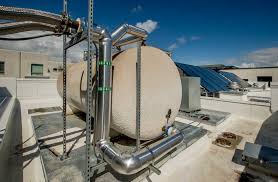
A glycol chiller plant is more than just a cooling unit; it is a sophisticated network designed to provide consistent, sub-zero fluids across large-scale industrial operations. From food processing plants to massive data centers, these centralized systems offer superior efficiency, redundancy, and scalability compared to standalone units.
Why Centralize Your Cooling?
Investing in a dedicated glycol plant offers several strategic advantages for growing facilities:
- Energy Efficiency: Large-scale compressors and variable frequency drives (VFDs) reduce power consumption per ton of cooling.
- Redundancy & Reliability: Multiple circuits ensure that if one compressor fails, the plant continues to meet the cooling load.
- Simplified Maintenance: Service technicians can maintain the entire system in one mechanical room rather than across the whole floor.
Key Components of a Glycol Plant
A robust plant is defined by the quality of its infrastructure:
| Component | Role in the Plant | Technical Benefit |
| Multi-Stage Compressors | Manages varying loads. | Prevents short-cycling & saves energy. |
| Integrated Pump Skids | Circulates the glycol/water mix. | Ensures high-flow pressure to all zones. |
| Expansion Tanks | Manages fluid thermal expansion. | Protects the system from pressure spikes. |
| PLC Control Panels | Brain of the operation. | Allows for remote monitoring and automation. |
Common Applications for Glycol Plants
Because glycol (antiprofreeze) allows fluids to reach temperatures well below 0°C (32°F) without freezing, these plants are essential for:
- Large-Scale Breweries: Managing multiple fermentation tanks and wort cooling simultaneously.
- Dairy Processing: Rapidly cooling milk during pasteurization.
- Chemical Processing: Controlling exothermic reactions in jacketed reactors.
- Ice Rinks: Maintaining consistent floor temperatures over vast surface areas.
Choosing the Right Glycol Concentration
The “secret sauce” of a chiller plant is the ratio of Propylene or Ethylene Glycol to water.
- 30% Glycol: Provides freeze protection down to approx. -14°C (6°F).
- 50% Glycol: Provides protection down to approx. -37°C (-35°F).
Important Note: Higher glycol concentrations increase the viscosity of the fluid, meaning your pumps have to work harder. Our engineers help you find the “Goldilocks zone” for your specific climate and process needs.
Design & Installation: Get It Right the First Time
Designing a glycol chiller plant requires precise load calculations and hydraulic balancing. We specialize in turnkey solutions that include:
- Custom Skid Fabrication: Pre-piped and pre-wired for fast site installation.
- Heat Recovery Integration: Using waste heat to pre-heat facility water.
- Future-Proofing: Designing headers that allow for easy expansion as your production grows.
Ready to scale your production? Consult with our industrial refrigeration experts to design a glycol chiller plant that meets your exact BTU requirements.