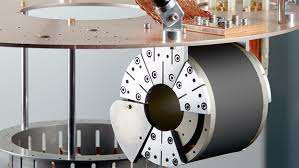

The Future of Cooling: A Comprehensive Guide to Magnetic Refrigeration Chillers
As industrial cooling demands shift toward sustainability and extreme energy efficiency, magnetic refrigeration chillers are emerging as a revolutionary alternative to traditional gas-compression systems. By leveraging the Magnetocaloric Effect (MCE), these chillers offer a “green” cooling solution that eliminates the need for harmful chemical refrigerants.
How Does Magnetic Refrigeration Work?
Unlike standard chillers that use compressors to cycle refrigerants between gas and liquid states, magnetic refrigeration uses a solid magnetic material (typically gadolinium or specialized alloys).
- Magnetization: When the material is exposed to a magnetic field, its atoms align, causing the material to heat up.
- Heat Removal: This excess heat is carried away by a heat-transfer fluid (usually water or glycol).
- Demagnetization: When the magnetic field is removed, the material cools down significantly—often reaching temperatures lower than its initial state.
- Cooling Cycle: The “cold” material then absorbs heat from the target environment, providing a continuous cooling effect.
Key Advantages of Magnetic Chillers
1. Superior Energy Efficiency
Magnetic chillers can be up to 30% more efficient than conventional vapor-compression systems. Because they don’t rely on energy-intensive compressors, the coefficient of performance (COP) is significantly higher, leading to massive long-term savings on industrial utility bills.
2. Zero Global Warming Potential (GWP)
Traditional HVAC systems use hydrofluorocarbons (HFCs) or ammonia, which can be toxic or contribute to the greenhouse effect. Magnetic refrigeration uses solid-state materials and water-based fluids, making it a 100% eco-friendly technology.
3. Reduced Maintenance and Noise
Without a high-pressure compressor, these systems have fewer moving parts. This results in:
- Lower vibration levels.
- Silent operation, ideal for hospitals or labs.
- Reduced wear and tear, extending the lifespan of the unit.
4. High-Ambient Performance
Modern magnetic cooling systems are being engineered to maintain high efficiency even in extreme ambient temperatures (up to 50°C), making them ideal for harsh industrial climates.
Applications in Industrial Cooling
Magnetic refrigeration technology is no longer just a laboratory concept; it is being integrated into various high-stakes sectors:
- Data Centers: For precision cooling with minimal energy overhead.
- Food Processing: Ensuring stable, low-temperature environments without chemical risks.
- Medical Equipment: Cooling MRI machines and sensitive laboratory storage.
- Industrial Manufacturing: Providing reliable cooling for heavy machinery and plastic molding processes.
Summary: Why Invest in Magnetic Cooling?
While the initial investment in magnetic refrigeration technology can be higher than traditional units, the ROI is driven by drastically lower energy consumption and a minimized carbon footprint. As global regulations tighten around refrigerant gases, magnetic chillers represent a future-proof investment for any technical facility.