
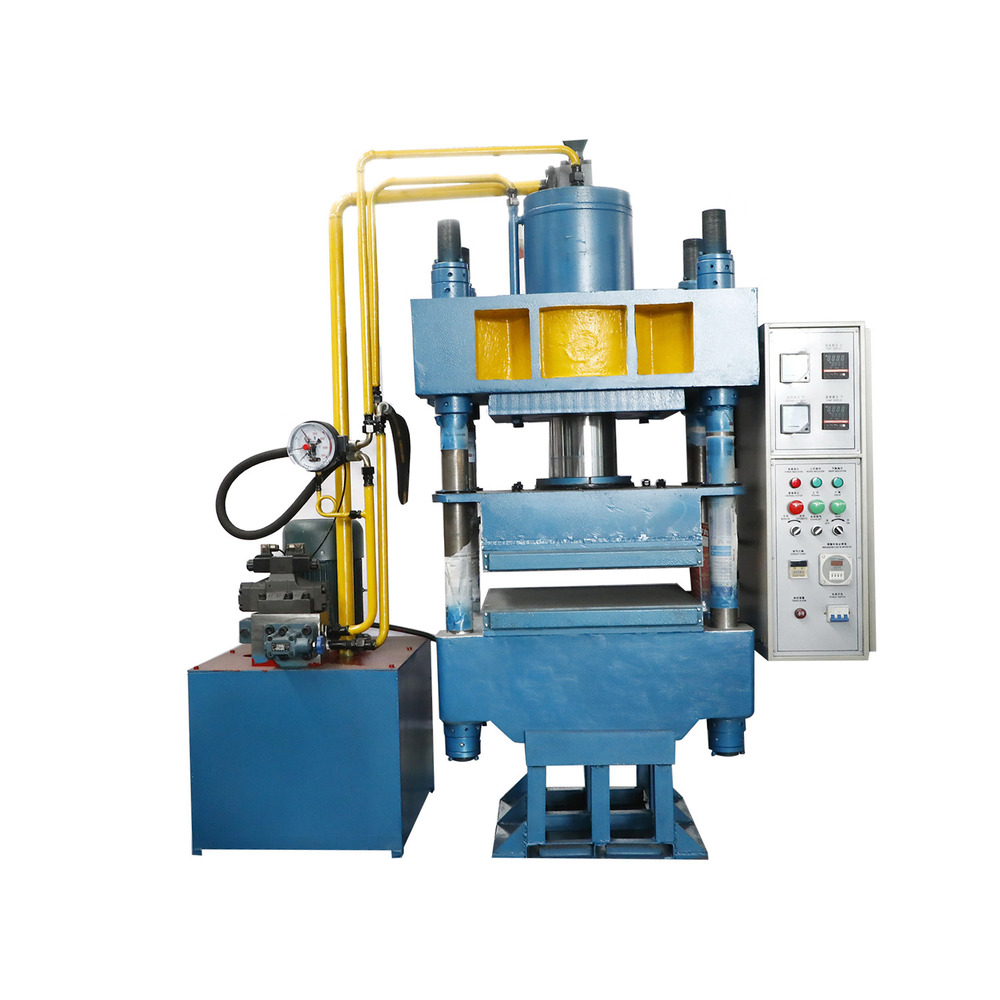
Introduction
In the precision-driven world of rubber molding, maintaining consistent mold temperatures is crucial to ensuring high-quality, defect-free products. A dedicated rubber molding press cooling system plays a pivotal role in enhancing cycle efficiency, preventing thermal degradation, and optimizing the overall molding process. By integrating smart temperature controls, energy-efficient components, and environmentally responsible design, modern cooling systems are engineered to meet the rigorous demands of today’s high-speed production lines.
Key Points on Rubber Molding Press Cooling System:
- Zonal Cooling Control
Advanced systems offer multi-zone cooling, allowing precise control over different sections of the mold, ensuring uniform temperature distribution and reduced part warpage. - Cycle Time Optimization via Instant Cooling Response
Utilizes high-response solenoid valves or proportional valves that instantly react to temperature deviations, minimizing press cycle times and improving productivity. - Vacuum Jacketed Piping for Heat Retention
Some high-performance systems use vacuum-jacketed pipelines to maintain coolant temperature over long runs, enhancing efficiency in large molding operations. - Integrated Mold Temperature Monitoring
Real-time digital sensors embedded in the mold feedback to the control unit to dynamically adjust the coolant flow for maintaining optimal molding conditions. - Eco-Friendly Cooling Circuits
Incorporates closed-loop cooling using non-toxic, biodegradable fluids, reducing environmental impact and minimizing water wastage. - Dual-Loop Cooling for Press and Hydraulic Unit
Features separate loops for mold cooling and hydraulic oil cooling, preventing thermal crossover and ensuring consistent operational temperatures. - Quick Disconnect Couplings with Leak-Proof Technology
Advanced systems use dry break couplings to enable fast maintenance or mold changes without fluid spillage. - Embedded Smart Alarms for Thermal Drift Detection
Systems alert operators in real time if mold or press components deviate from set thermal ranges, preventing quality defects in molded parts. - Integrated Chiller Compatibility
Designed to directly interface with industrial chillers, enabling smart load balancing and avoiding unnecessary energy consumption. - Variable Flow Control Using Inverter Pumps
Adopts VFD-based pump systems to vary coolant flow based on real-time mold temperature feedback, significantly reducing energy usage.
Conclusion
A robust and intelligently designed cooling system is no longer just a support component—it’s a performance enhancer for rubber molding presses. With features like zonal temperature control, dual-loop circuits, and smart monitoring, these systems not only improve product consistency but also reduce energy consumption and downtime. Investing in an advanced cooling solution is a strategic move toward superior product quality, faster cycle times, and long-term operational efficiency.