
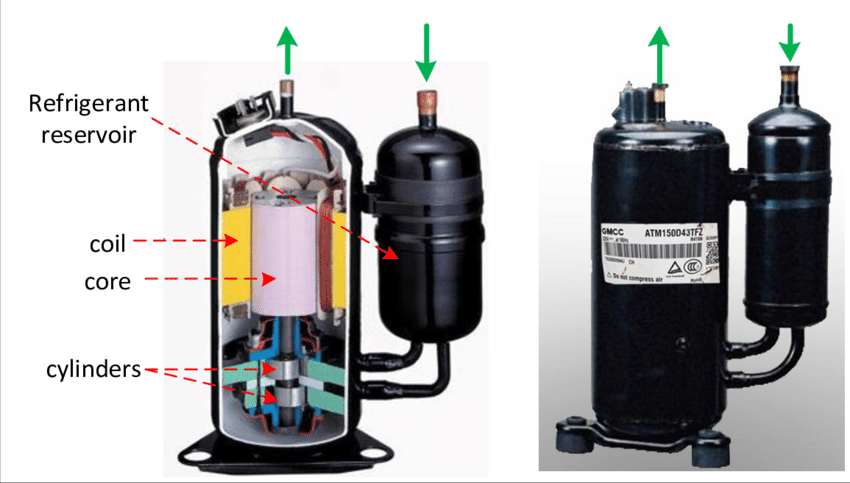
Variable speed condenser coil systems are revolutionizing the way HVAC and chiller units manage heat rejection. Unlike traditional fixed-speed systems that operate at constant capacity regardless of cooling demand, variable speed condenser coils intelligently adjust fan speed and refrigerant flow based on real-time thermal load and ambient conditions. This dynamic response not only ensures optimal condensing pressure but also drastically improves energy efficiency, reduces compressor stress, and minimizes operational noise. As industries shift toward smart cooling technologies, these coils have become essential for adaptive, cost-effective, and eco-friendly refrigeration and air conditioning systems.
It’s More Than Just a Coil – It’s a Smart Heat Exchange System
A variable speed condenser coil is not just a passive metal structure. In reality, it’s the core of a dynamic system where the fan speed, refrigerant flow, and heat rejection rate all adjust based on real-time needs. Unlike traditional condensers where everything runs at fixed speeds, variable speed systems constantly adapt based on conditions such as:
- Ambient temperature
- Cooling load
- Desired set point
- Compressor performance
This allows for much more efficient heat rejection, reduced energy use, and better system stability.
Variable Speed EC or VFD Fans Drive Airflow Efficiency
In these systems, Electronically Commutated (EC) fans or VFD (Variable Frequency Drive)-controlled motors adjust their speed smoothly and precisely. Here’s how it helps:
- At low cooling demand, fans spin slower, reducing noise and power draw.
- At high ambient temperatures or high load, fans speed up to increase airflow across the coil.
This ability to modulate air movement significantly boosts energy efficiency and reduces wear on mechanical parts. For example, a fan that only operates at 50% speed uses about 12.5% of full-load energy, according to the cube law for fan power.
Dynamic Condensing Temperature = Less Compressor Load
Conventional systems maintain high condensing pressures regardless of outdoor temperature. That puts unnecessary load on the compressor.
Variable speed condenser systems lower the condensing temperature when possible—called “floating head pressure control”.
Result:
- Less work for the compressor
- Higher cooling efficiency (COP)
- Lower electricity bills
- Extended component life
For example, if the outside temperature is 20°C, there’s no need to keep the condensing temperature at 45°C. The system can run the coil fans slower and reduce discharge pressure, cutting energy use by up to 30–40% in some cases.
Coil Design Optimized for Variable Airflow
The condenser coil itself is engineered to function efficiently across a range of airflows. This includes:
- Wider fin spacing to avoid clogging at low airflow
- Hydrophilic fin coating for better condensate shedding
- Optimized tube circuitry to ensure even refrigerant distribution despite varying conditions
All this makes sure the coil doesn’t lose its heat exchange ability when airflow is low—something that would cause inefficiencies in standard systems.
Supports Advanced Operating Modes (Economizer, Night Cooling, etc.)
Many high-end chillers or rooftop units using variable speed condensers support advanced modes like:
- Night cooling mode – fans operate slowly during the night to pre-cool the system using cooler ambient air.
- Economizer mode – allows using outdoor air or water for partial cooling.
- Humidity control – fine-tunes condensation rates based on latent load.
All of these are made more effective when the condenser coil airflow and performance can adjust fluidly.
Variable speed condenser coil technology represents a smart, forward-looking approach to managing heat rejection in variable load conditions. By allowing the condenser fan to modulate speed based on ambient temperature and system load, these coils provide precise control, improved part-load efficiency, and enhanced system longevity. Whether in commercial chillers, rooftop HVAC units, or industrial refrigeration plants, variable speed condenser coils reduce energy waste, lower operating costs, and support sustainability goals. As energy standards tighten and operating efficiency becomes paramount, this technology is no longer optional