
Maximize Water and Chemical Savings One of the most significant financial benefits of upgrading to high-efficiency drift eliminators is the drastic reduction in operational costs. Cooling tower drift consists of water droplets that…

Design and Working Principle of Cooling Tower Drift Eliminators
Understanding the Cooling Tower Drift Eliminators Cooling tower drift eliminators are engineered components designed to minimize the loss of water droplets from cooling towers. Their primary function is to capture and divert water…
How Drift Eliminators Help in Maintaining Air Quality
The Role of Drift Eliminators in Air Quality Improvement Drift eliminators play a crucial part in maintaining Air Quality Improvement by capturing water droplets laden with contaminants before they escape cooling towers. These…
Importance of Drift Eliminators in Controlling Water Loss
Evolution of Drift Eliminators in Water Management Drift eliminators have evolved dramatically over the years, shifting from simple deflection devices to advanced systems engineered to maximize water retention and minimize loss. Innovations in…

How Honeycomb PVC Fills Reduce Power Consumption in Cooling Towers
Enhanced Heat Transfer Efficiency Honeycomb PVC fills, often referred to as high-efficiency cooling tower media, dramatically improve the rate of heat rejection compared to older, less sophisticated fill designs. This efficiency stems from…
Eco-Friendly Aspects of Using PVC Honeycomb Fills
Durability as a Pillar of Sustainability The primary eco-friendly advantage derived from utilizing PVC honeycomb fills lies in their exceptional material longevity. Unlike less resilient materials that degrade quickly due to exposure to…
Honeycomb PVC vs Film Fills – Which One to Choose?
Understanding the Fundamental Differences Between Honeycomb and Film Fill Technologies Honeycomb PVC fills and film fills represent two distinct cooling tower fill material approaches, each with unique operational characteristics and performance profiles. Honeycomb…
The Impact of Poor Fill Design on Cooling Tower Performance
How Poor Fill Design Undermines Heat Transfer A cooling tower’s fill pack is the core heat-exchange surface. When fill is poorly designed—wrong flute geometry, inadequate surface area, or inconsistent wetting—it disrupts film formation…
Signs That Your Cooling Tower Fills Need Replacement
Visible Wear and Corrosion: Early Warning Signs You Can’t Ignore One of the most telling indicators that your cooling tower fills need replacement is visible wear and corrosion. Over time, the fill material—typically…
Choosing the Right Fill Thickness for Your Cooling Tower
Understanding Fill Thickness and Its Fundamental Impact Selecting the appropriate fill thickness, more accurately described as the spacing between individual fill sheets, is a critical decision influencing a cooling tower's overall performance, efficiency,…
Why Honeycomb PVC Fills Are Ideal for High-Temperature Operations
Engineered Thermal Resilience for Elevated Operations Honeycomb PVC fills excel in high-temperature cooling tower operations up to 60°C by leveraging their unique cellular structure, which promotes even heat dissipation and prevents localized overheating.…
How to Maintain and Clean Honeycomb PVC Fills for Longer Life
Chemical Compatibility & Safe Cleaning Protocols Maintaining honeycomb PVC fills requires strict avoidance of chlorine-based cleaners and strong acids, which degrade PVC integrity and shorten lifespan. Instead, use pH-neutral biocides (6.5–8.5 range) and…
Difference Between PVC and PP Fills – Which Is Better for Cooling Towers?
Material Composition and Thermal Resistance Properties PVC (Polyvinyl Chloride) and PP (Polypropylene) fills represent two distinct material technologies in cooling tower applications, each offering unique advantages for specific operational environments. PVC fills are…
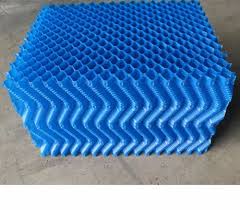
Role of Honeycomb PVC Fills in Enhancing Cooling Tower Efficiency
Superior Heat Transfer and Thermal Performance Honeycomb PVC fills have revolutionized the cooling tower industry by significantly improving heat transfer efficiency and operational performance. These specialized fills, characterized by their hexagonal cellular structure,…
OEM Spindle Cooling System
Critical Thermal Management in High-Speed CNC Spindle Operations The sophisticated deployment of OEM Spindle Cooling System technology represents a fundamental requirement for maintaining precision and extending operational life in modern CNC manufacturing environments.…
Variable Flow Brazed Plate Heat Exchanger
Revolutionary Asymmetric Design Technology for Variable Flow Applications The sophisticated engineering of Variable Flow Brazed Plate Heat Exchanger systems addresses critical challenges in applications with significantly different flow rates and thermal requirements. Less…
Applications of Brazed Plate Heat Exchanger in HVAC & Refrigeration
Driving Efficiency: Brazed Plate Heat Exchanger Applications in HVAC & Refrigeration The sophisticated deployment of Brazed Plate Heat Exchanger HVAC Applications spans critical thermal management functions across modern heating, ventilation, air conditioning, and…
Cleaning and Maintenance of Brazed Plate Heat Exchanger
Chemical Cleaning and Professional Maintenance Protocols The sophisticated maintenance requirements of Cleaning Brazed Plate Heat Exchanger systems demand specialized cleaning procedures to maintain optimal thermal performance and extend operational lifespan. The simple reason…
Piping and Connections in Brazed Plate Heat Exchanger
Critical Connection Types and Installation Requirements The sophisticated design of Piping Connections Brazed Plate Heat Exchanger systems requires precise installation techniques to ensure optimal thermal performance and operational reliability. Always mount the unit…
Flow Arrangement in Brazed Plate Heat Exchanger
Counter-Current Flow Configuration for Maximum Heat Transfer Efficiency The sophisticated engineering of Flow Arrangement Brazed Plate Heat Exchanger systems centers around achieving optimal thermal performance through strategic flow path configuration. The flow principle…
Plate Patterns in Brazed Plate Heat Exchanger
The Secret Geometry: Understanding Plate Patterns in Brazed Plate Heat Exchangers While a brazed plate heat exchanger (BPHE) is renowned for its compact design and energy efficiency, the true secret to its exceptional…
Components of Brazed Plate Heat Exchanger
Essential Structural Components and Advanced Engineering Design The Brazed Plate Heat Exchanger Components represent a sophisticated assembly of precision-engineered elements that work together to deliver exceptional thermal performance. SWEP brazed plate heat exchangers…
Heat Transfer Mechanism of Brazed Plate Heat Exchanger
Decoding the Heat Transfer Mechanism in Brazed Plate Heat Exchangers At the heart of every energy efficient brazed plate heat exchanger (BPHE) lies a remarkably effective heat transfer mechanism that sets it apart.…
Energy Efficient Brazed Plate Heat Exchanger
Superior Energy Performance for Modern Industrial Applications The performance and efficiency of the brazed plate heat exchanger have been proven through 30 years of constant development to ensure high thermal efficiency leading to…
Small Size Oil Cooler: Compact Cooling Solutions for Modern Machinery
Essential Cooling Technology for Compact Applications When it comes to maintaining optimal performance in compact machinery and vehicles, a Small Size Oil Cooler serves as an essential component that prevents overheating and extends…
Variable Flow Gasketed Plate Heat Exchanger
Embracing Dynamism: Why Variable Flow is the New Normal for GPHEs In today's industrial and commercial landscapes, heat transfer processes rarely operate at constant, steady-state conditions. Dynamic operating conditions, characterized by fluctuating heat…