
Dry cooling towers are essential in industrial applications where water conservation is crucial, such as in power plants, chemical processing units, and refineries. Unlike wet cooling towers, they do not rely on water…

Structural Materials in Dry Cooling Towers
Dry cooling towers are crucial for heat dissipation in various industries—ranging from power generation to petrochemical processing—without the use of water. One of the most vital factors that determine the efficiency, durability, and…
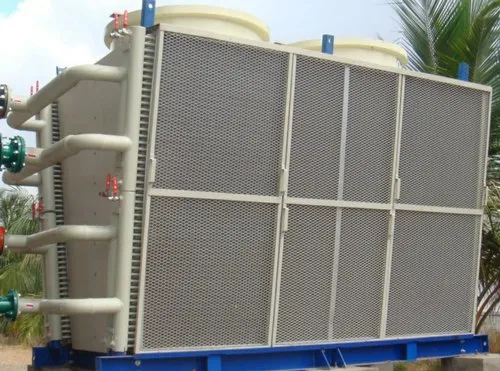
Heat Transfer in Dry Cooling Towers
Dry cooling towers have become a critical component in modern industrial cooling systems, particularly where water conservation, environmental compliance, and low maintenance are essential. A key aspect of their effectiveness lies in the…
Energy Efficiency in Dry Cooling Towers
In a world where sustainable industrial operations are no longer optional but essential, energy efficiency has become a top priority across sectors. One such area seeing a major transformation is cooling technology—especially with…
Characteristics of Dry Cooling Tower
As industries push for sustainable, cost-effective, and environmentally conscious cooling solutions, dry cooling towers have become a vital technology across multiple sectors. Unlike conventional wet cooling towers that consume vast amounts of water…
Maintenance of Crossflow Cooling Towers
In the world of industrial and commercial cooling systems, crossflow cooling towers are favored for their open-access design, energy-efficient operation, and ease of maintenance. However, even the most well-designed cooling tower cannot perform…
Crossflow vs Counterflow Cooling Towers
When selecting a cooling tower for industrial or HVAC applications, one of the most important decisions is choosing between a crossflow and a counterflow design. Both tower types perform the same fundamental job…
Water Distribution in Crossflow Cooling Towers
In a crossflow cooling tower, water distribution is the critical first step in the cooling process. While much attention is paid to the fan system and fill media, it's the water distribution system…
Drift Eliminators in Crossflow Cooling Towers
Introduction Drift eliminators may be small in size, but they play a huge role in the overall performance and sustainability of crossflow cooling towers. While fill media and fans help reduce the temperature…
Fill Media in Crossflow Cooling Towers
In crossflow cooling towers, the fill media is not just an internal accessory — it is the core thermal component that enables the tower to perform effective evaporative cooling. While the fan system…
Crossflow Cooling Tower Fan Systems
In the world of evaporative cooling systems, the fan system in a crossflow cooling tower plays a pivotal role in driving thermal performance. It is the central force responsible for drawing ambient air…
Structural Components of Crossflow Cooling Towers
Crossflow cooling towers are among the most preferred solutions in industrial, HVAC, and commercial cooling applications due to their reliable performance, easy maintenance, and energy-efficient design. But behind every efficient crossflow tower is…
Cooling Mechanism in Crossflow Cooling Towers
In industries where heat control is crucial—such as HVAC, power generation, plastics, food processing, and steel—cooling towers serve as the backbone of thermal regulation. Among the various types of cooling towers, crossflow cooling…
Energy Efficient Crossflow Cooling Towers
In today’s energy-conscious world, energy efficiency isn’t just a benefit — it's a necessity. Whether it's a commercial HVAC system, industrial plant, or data center, businesses are looking for cooling solutions that can…
Characteristics of Crossflow Cooling Tower
In industrial and HVAC cooling applications, selecting the right type of cooling tower is critical for long-term system performance, energy efficiency, and maintenance cost control. One of the most widely adopted technologies today…
Fan Systems in Closed Loop Cooling Towers
In the architecture of a closed loop cooling tower, the fan system is one of the most vital and performance-defining components. While the coil system handles the actual heat exchange, it is the…
Water Treatment in Closed Loop Cooling Towers
While closed loop cooling towers are often praised for their clean, sealed, and low-maintenance designs, they’re not completely immune to internal degradation. The misconception that closed loop systems don’t require water treatment often…
Coil Design in Closed Loop Cooling Towers
At the very heart of a closed loop cooling tower lies its coil system—a critical component responsible for transferring heat from the process fluid to the atmosphere without allowing any contamination. The coil…
Components of Closed Loop Cooling Tower
Closed loop cooling towers are engineered for precision, cleanliness, and energy efficiency. Unlike open systems that expose the process fluid to air and external contaminants, closed loop systems circulate a sealed fluid—usually water…

Materials Used in Closed Loop Cooling Towers
Closed loop cooling towers are known for their efficient, contamination-free cooling performance, and a key reason behind their long life and reliability is the careful selection of materials used in their construction. These…
Maintenance of Closed Loop Cooling Towers
Closed loop cooling towers are favored across various industries for their clean operation, low contamination risk, and lower maintenance compared to open loop systems. These towers operate by circulating process fluid through a…
Heat Exchange Mechanism in Closed Loop Towers
As industries evolve toward more sustainable, hygienic, and cost-effective cooling solutions, the closed loop cooling tower is increasingly being recognized as a highly efficient and clean alternative to traditional systems. What sets it…
Characteristics of Closed Loop Cooling Tower
Closed loop cooling towers have become increasingly popular across industries that demand high thermal efficiency, contamination-free operation, and minimal maintenance. Unlike open systems that expose the process fluid to air, a closed loop…
Water Distribution in Wooden Cooling Towers
The heart of cooling performance in any wooden cooling tower lies in how efficiently the hot process water is distributed across the fill media. If the water doesn't cover the fill area uniformly,…

Drift Eliminators in Wooden Cooling Towers
In the world of evaporative cooling systems, the focus is often placed on fan systems, fill media, and structural strength. However, one often underrated yet highly crucial component is the drift eliminator. In…
Fill Media in Wooden Cooling Towers
When it comes to the performance of wooden cooling towers, fill media is arguably the most critical internal component. It is the zone where hot process water and ambient air interact, making it…